
Congratulations to Professor Zhiqin CHU of the Department of Electrical and Electronic Engineering, Faculty of Engineering, who has been honoured with the Outstanding Young Researcher Award (OYRA) at the HKU Excellence Awards 2025. This recognition celebrates his exceptional research accomplishments.
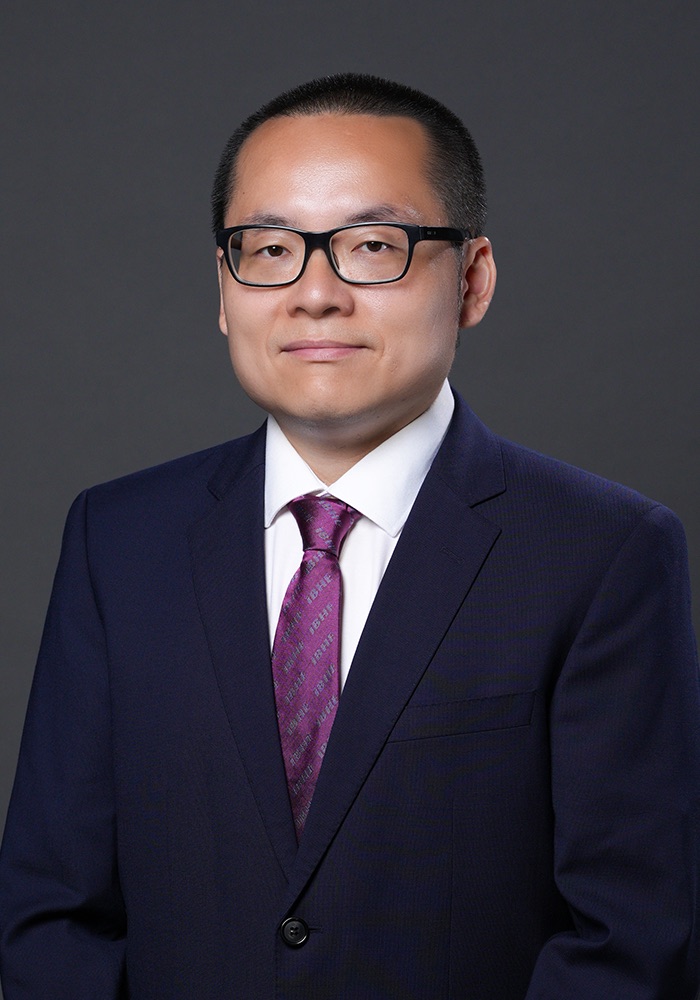
Prof. Chu’s Feature Story: From Rigid Rocks to Flexible Sheets: Unlocking a New Era of Diamond
Sparkling with charm, diamonds have long enjoyed a cult status among consumers. Few, however, realise their value, in their natural form, in bringing about revolutionary changes.
Research by Professor Zhiqin Chu, an Associate Professor from the Department of Electrical and Electronic Engineering of HKU Engineering, has paved the way for future adoption of diamonds for both cutting-edge research and manufacturing.
This followed Professor Chu’s groundbreaking discovery of a novel method of creating membranes exfoliated from diamonds – the hardest material on earth. The research success, published in the top scientific journal, Nature, opens the door for the use of new possible materials for key fields from electronics, photonics, medical implants, biosensors, to drug delivery systems.
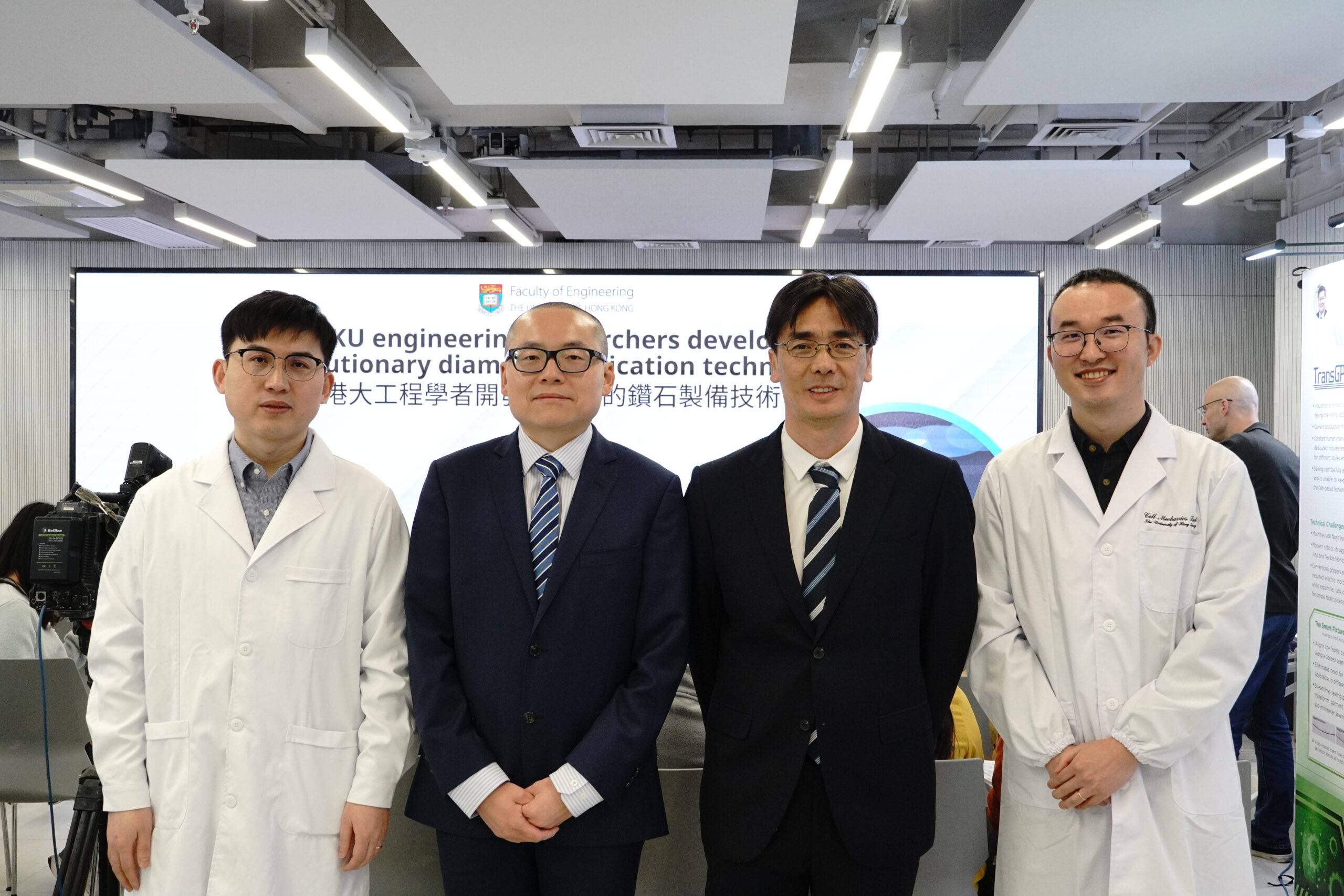
He has set up a production plant in Qianhai, Shenzhen, placing several of his former students as staff there for the prime task of producing diamond membranes for testing and possible use by major technology companies. Investment worth about RMB$12 million has poured into the team’s production base. “We will generate a small amount of samples for testing by a few initial customers from electronics industry and others”, said Professor Chu. “That is our business model. It is a small-scale production of diamond membrane, a novel material for various industries. We focus on the membrane production, providing high-quality solutions for downstream applications”.
Mammoth Challenge of The Bulky Item
For years researchers worldwide have known about the exceptional qualities of diamonds, yet focusing on a single crystal diamond, they met with little success in using the bulky item for industrial purposes. “It is like a rigid rock and very difficult to manufacture anything out of it”, said Professor Chu. “I told my students, it’s like you have a very beautiful equation, but you don’t have a solution for it. People all look at this equation, and they are all attracted to it”.
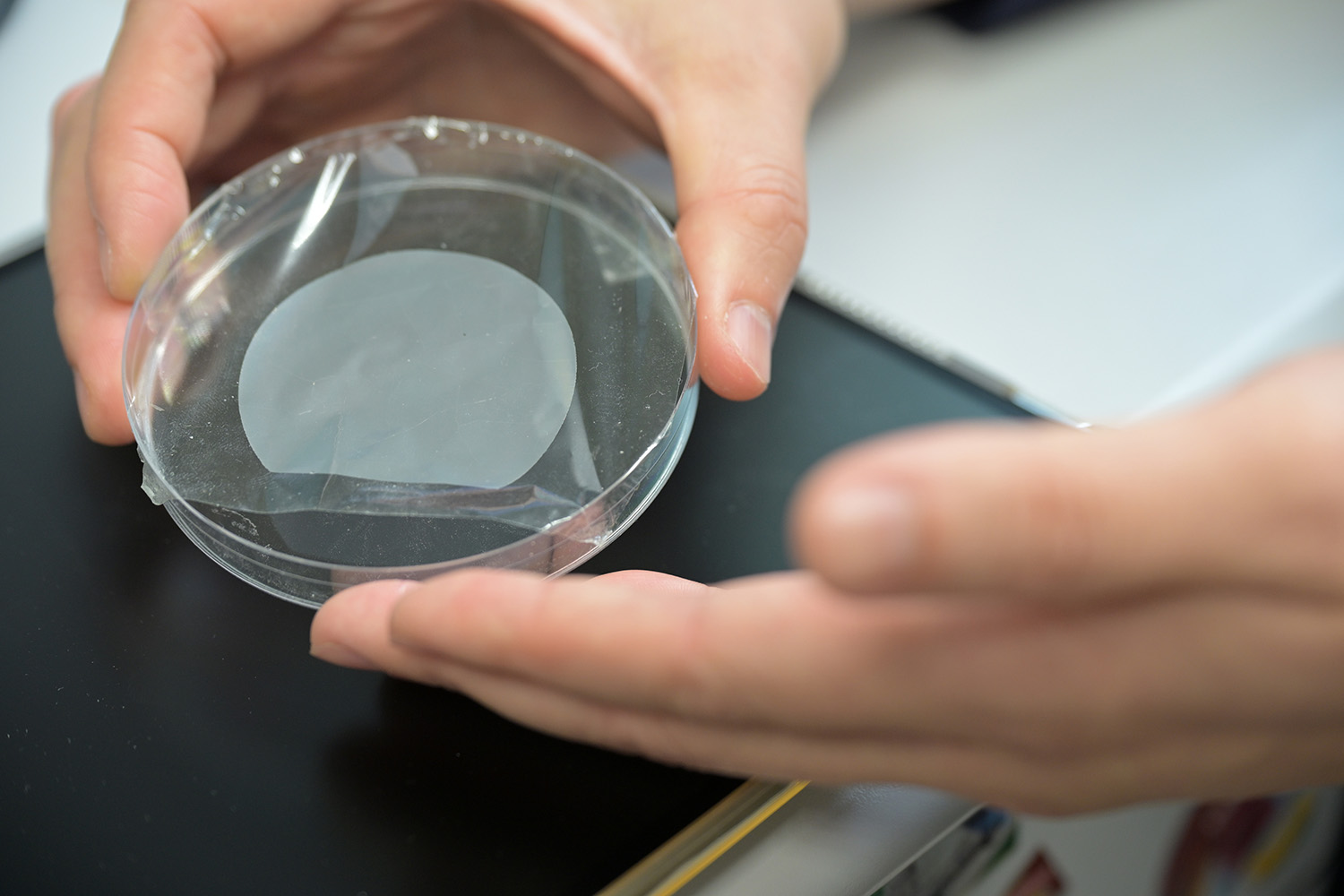
Since 2022, he has also collaborated with the Southern University of Science and Technology, and the Dongguan Institute of Opto-Electronics of Peking University for production of sample membranes. “We now have an approximate solution, that is the polycrystalline diamond membrane. We have shown that with a simple, scalable and reliable method, through the use of sticky tape, we can extract ultrathin and transferable polycrystalline diamond membranes.”
Systematic experimental and theoretical studies reveal that the quality of the exfoliated membranes depends on the peeling angle and membrane thickness, for which largely intact diamond membranes can be robustly produced within an optimal operation window.
According to Professor Chu, the flat workable surface of the membranes supports standard micromanufacturing techniques, and their ultra-flexible nature allows for direct elastic strain engineering and deformation sensing applications, which is not possible with bulky diamonds.
Professor Chu is grateful to Professor Yuan Lin from the Department of Mechanical Engineering for providing the theoretical knowledge on the physics behind the exfoliation process. “Such knowledge is crucial for the discovery and future commercialisation of our technology because we need to know with which window, angle, and what force we should apply in extracting a membrane”, he explained.
Wide-ranging Use of Diamonds + A Would-be Game Changer
Professor Chu has reasons to be hopeful about future widespread use of diamonds for manufacturing purposes. Citing the example of foldable phones, he said, diamonds could be used to produce thermal pads for them, rivalling the commonly used material of graphene in the future. Both diamonds and graphene are known for their thermal conductivity, but the former offers superior vertical heat dissipation and more balanced thermal distribution for advanced designs because of its unique properties.
Diamonds are the best candidate for thermal conductivity, said Professor Chu, making them perfect heat spreaders for high-performance computing systems, electric vehicles, smartphones and other applications where efficient heat dissipation is critical.
Also, the membranes are ultra-thin (sub-micrometre thickness), ultra-flat (sub-nano surface roughness) and ultra-flexible (360° bendable). Moreover, a two-inch diamond wafer (large area) can be made in just 10 seconds, which is compatible with existing semiconductor technologies and meets the needs of even quantum devices. “For the first time in the world, diamonds can now be used in the form of sheets”, noted Professor Chu.
Professor Chu believes the continuous consumer demand for high-frequency, high-speed, high-power equipment with quick charging and limited energy consumption in today’s world will drive the need for advanced materials like diamonds. “We really have the best material now”, he noted. “It is almost impossible to support the kind of growth or model such as 6G communication, relying on silicon alone”. A ‘diamond-era’ could dawn in maybe 10 to 30 years, Professor Chu added, should more investments be injected into relevant research, resulting in ground-breaking products.
Having filed for a patent for his latest technology, Professor Chu attributes the breakthrough partially to luck, though he and his team have spent years on the research since he joined HKU in 2018, after a stint as a postdoctoral fellow at the University of Stuttgart, Germany.
Series of Breakthroughs
His initial focus after returning to Hong Kong, where he obtained his doctoral degree in physics, was the defects and colours of diamonds. Through studying the light-reflecting nanoparticles in the rock, he was hoping to fabricate some structural colours resembling those seen on butterflies.
His work caught the attention of fellow scientists at HKU, resulting in meaningful collaborations. A joint research conducted by him and the Faculty of Dentistry, the result of which published in Biomaterials Science in 2021, revealed nano-diamonds to be of therapeutic value in treating oral infection.
Last year, his team unveiled a new technique known as Quantum-Enhanced Diamond Molecular Tension Microscopy (QDMTM), which allows for label-free measurement of cellular forces at the nanoscale, enhancing the study of cellular mechanics, fundamentally changing the way for studying important issues such as cell-cell or cell-material interactions.
The discovery facilitates research in biophysics and biomedical engineering. Compared to traditional approaches, such as fluorescent probes, it has the potential to overcome limitations such as photobleaching, limited sensitivity, and ambiguity in data interpretation.
Already Professor Chu owns 16 patents related to diamond technology, having won multiple awards, including the Gold Medal at the 2023 International Invention Innovation Competition in Canada, the Silver Medal at the 2022 Inventions Geneva Evaluation Days, and the Gold Medal at the 2024 International Exhibition of Inventions of Geneva.
On the latest, membrane extraction technology, he experienced a major setback at the early stage when a postdoctoral fellow in his team quit out of frustration with the then seemingly futile research.
“We followed the conventional approach initially”, Professor Chu recalled. “That means we did what everyone did. We had this big diamond, and tried to polish it to create some small pieces. But no useful results were produced. We got stuck. That’s painful to us”.
His remaining students continued with experimenting nonetheless until the day in 2023 when a sample dropped to the floor. Professor Chu asked the student concerned to take a picture of the sample. What he saw in the picture prompted him to change the direction of the research. There he saw wrinkles on the substrate.
Rather than following the conventional approach, he decided to go into the uncharted territory of seeking to exfoliate membranes from the hard material instead. And it turned out that his instinct was right.
“An idea came to my mind: why don’t I just peel off a membrane directly from the substrate?” he recalled.
His team tried, tested and it worked. They succeeded in discovering a valuable, usable material. “Looking back, it was quite an easy process but one that no one had thought of”, said Professor Chu. “I think what we learned is that if you want to do something that is very difficult, you cannot follow what other people have done”.
Looking back, Professor Chu said he would have started with a small goal to avoid huge frustration later on. “I say to some of my young colleagues that they should start by doing something that is almost achievable, especially in the early stage of their research, because that way they can build up their confidence. I also say the same to my students”.
A Drive to Contribute
Still his passion for contributing to scientific research kept him going. His relentless efforts paid off eventually. “We now have this platform for anyone interested in diamond membranes; anyone is welcome to approach us”.
Commercialising the membranes – having advanced products made with them – remains his ultimate goal. “My wish is that people would know that diamond semiconductors do exist. I hope to see the diamond-based technology being widely used in our daily life, seen in phones, televisions, computers, sensors, everywhere”, said Professor Chu. The cost of the membranes remains high now, he added, but would come down once mass production occurs.
When not researching, teaching remains his other favourite activity on campus. He enjoys getting to know about the younger generation, whose changes in behaviours and attitudes over the years have been noticeable to him.
Concerned about the huge impact of social media on today’s youth, he is keen on instilling positive values in them. “We are living in a fast-changing society, and youngsters are bombarded with information without any filters. I want to deliver some of my thoughts and knowledge to the younger generation. Imagine if they can be stimulated or inspired, that is very meaningful”.
As a way to help students become better focused, rather than being drawn excessively to social media, he likes to involve them in projects or experiments”. Young people are so energetic, it is good for them to engage in projects and have more hands-on experience”.
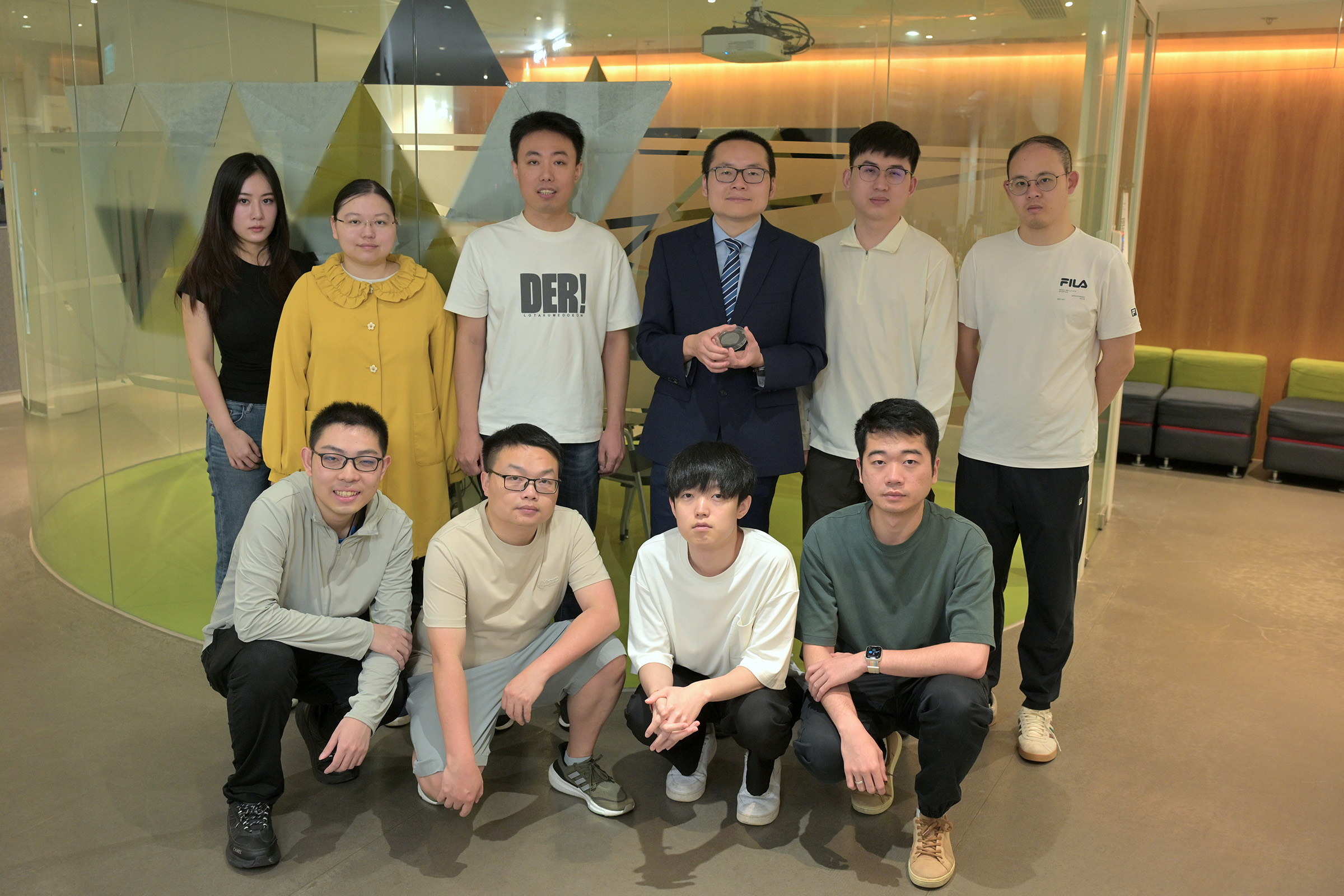
Research Group (PBB Lab) website: https://www.zqchu-pbblab.hku.hk
Sources from the HKU Faculty of Engineering website: