
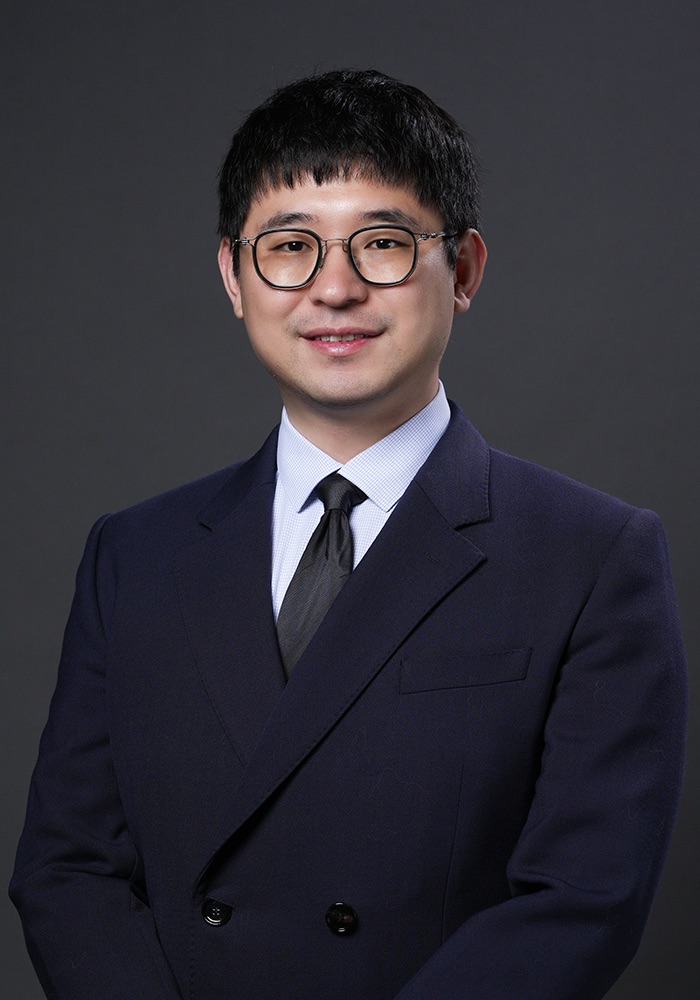
Biography
Can Li’s research aims to explore and build the next-generation computing hardware based on post-CMOS emerging devices, e.g. memristors. Before joining HKU, Dr. Li worked at Hewlett Packard Labs in California, USA. He obtained his bachelor’s degree from Peking University and his Ph.D. from the University of Massachusetts Amherst. In recent years, he has published 82 peer-reviewed publications, including 19 research papers in Nature series journals. Based on his research achievements, after joining HKU, he has received the National Natural Science Foundation of China Excellent Young Scientist Fund, the Hong Kong Research Grants Council Early Career Award, and the Croucher Tak Wah Mak Innovation Awards.
Related Links
Selected Publications
- Jiang, M., Shan, K., He, C., & Li, C. (2023). Efficient combinatorial optimization by quantum-inspired parallel annealing in analogue memristor crossbar. Nature Communications, 14, 5927.
- Mao, R., Sheng, X., Graves, C., Xu, C., & Li, C. (2023, July 9-13). ReRAM-based graph attention network with node-centric edge searching and hamming similarity. In IEEE/ACM The Design Automation Conference (DAC).
- Mao, R., Wen, B., Kazemi, A., Zhao, Y., Laguana, A. F., Lin, R., Wong, N., Neimier, M., Hu, X. S., Sheng, X., Graves, C., Strachan, J. P., & Li, C. (2022). Experimentally validated memristive memory augmented neural network with efficient hashing and similarity search. Nature Communications, 13, 6284.
- Jiang, M., Shan, K., Sheng, X., Graves, C., Strachan, J. P., & Li, C. (2022, December 3-7). An efficient synchronous updating memristor-based Ising solver for combinatorial optimization. In IEEE International Electron Devices Meeting (IEDM).
- Li, C., Graves, C. E., Sheng, X., Miller, D., Foltin, M., Pedretti, G., & Strachan, J. P. (2020). Analog content addressable memories with memristors. Nature Communications, 11, 1638.