
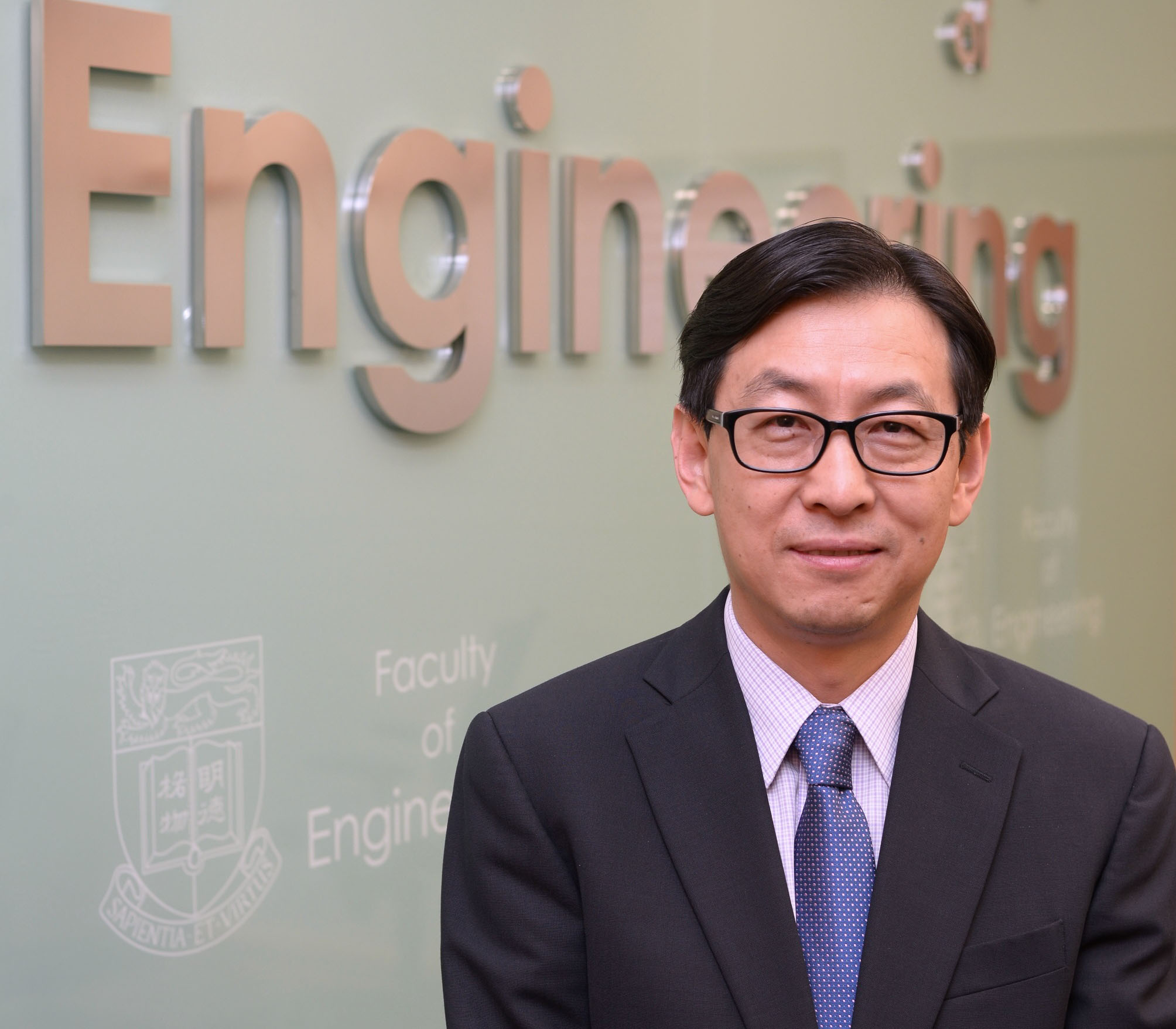
Professor Ed X. Wu, Chair of Biomedical Engineering and Lam Woo Professorship in Biomedical Engineering of the Department of Electrical and Electronic Engineering, Dr. Xunda Wang and Dr. Alex Leong at HKU Laboratory of Biomedical Imaging and Signal Processing had worked on the research for the topic “Functional MRI reveals brain-wide actions of thalamically-initiated oscillatory activities on associative memory consolidation”. The research was recently published by Nature Communications on April 17, 2023.
Details of the publication:
Functional MRI reveals brain-wide actions of thalamically-initiated oscillatory activities on associative memory consolidation,
XUNDA WANG, ALEX T L LEONG, SHAWN Z K TAN, EDDIE C WONG, YILONG LIU, LEE-WEI LIM & ED X WU, Article in Nature Communications,
https://pubmed.ncbi.nlm.nih.gov/37069169/
Abstract:
Large-scale spatiotemporal coordination of brain neural activities is vital for effective information processing in the brain. As a key oscillatory activity in the brain, thalamic spindle activities are long believed to support memory consolidation. However, their propagation characteristics and causal actions at systems level remain unclear.
In this study, using functional MRI (fMRI) and electrophysiology recordings, we discover that optogenetically-evoked somatosensory thalamic spindle-like activities target numerous sensorimotor (cortex, thalamus, brainstem and basal ganglia) and non-sensorimotor limbic regions (cortex, amygdala, and hippocampus) in a stimulation frequency- and length-dependent manner. Behaviorally, evoking these global cross-modal activities during memory consolidation improves visual-somatosensory associative memory performance. More importantly, parallel visual fMRI experiments uncovers response potentiation in brain-wide sensorimotor and limbic integrative regions, especially superior colliculus, periaqueductal gray, and insular, retrosplenial and frontal cortices.
Together, our findings reveal the cross-modal spatiotemporal targeting characteristics of thalamo-cortical spindle activities. We further discover their causal actions during memory consolidation at systems level. Our study also demonstrates the initiation of low frequency oscillatory activities brain-wide as a potential intervention to enhance memory performance or rescue memory decline in future studies.