
Professor Feifei WANG of the Department of Electrical and Computer Engineering and his team worked on the research on “Real‑time near‑infrared II fluorescence navigation of magnetic nanorobots for image‑guided therapy.” The findings were published in Science Advances on January 1, 2026.

Details of the publication:
Real‑time near‑infrared II fluorescence navigation of magnetic nanorobots for image‑guided therapy
Zideng DAI, Zhisheng WU, Wayne Jason LI, Sixin XU, Danyang XU, Puxian XIONG, Zhexi LIU, Chuang ZHANG, Liangqiong QU, Lianqing LIU, and Feifei WANG
Article in Science Advances
https://www.science.org/doi/10.1126/sciadv.aea5126
Abstract
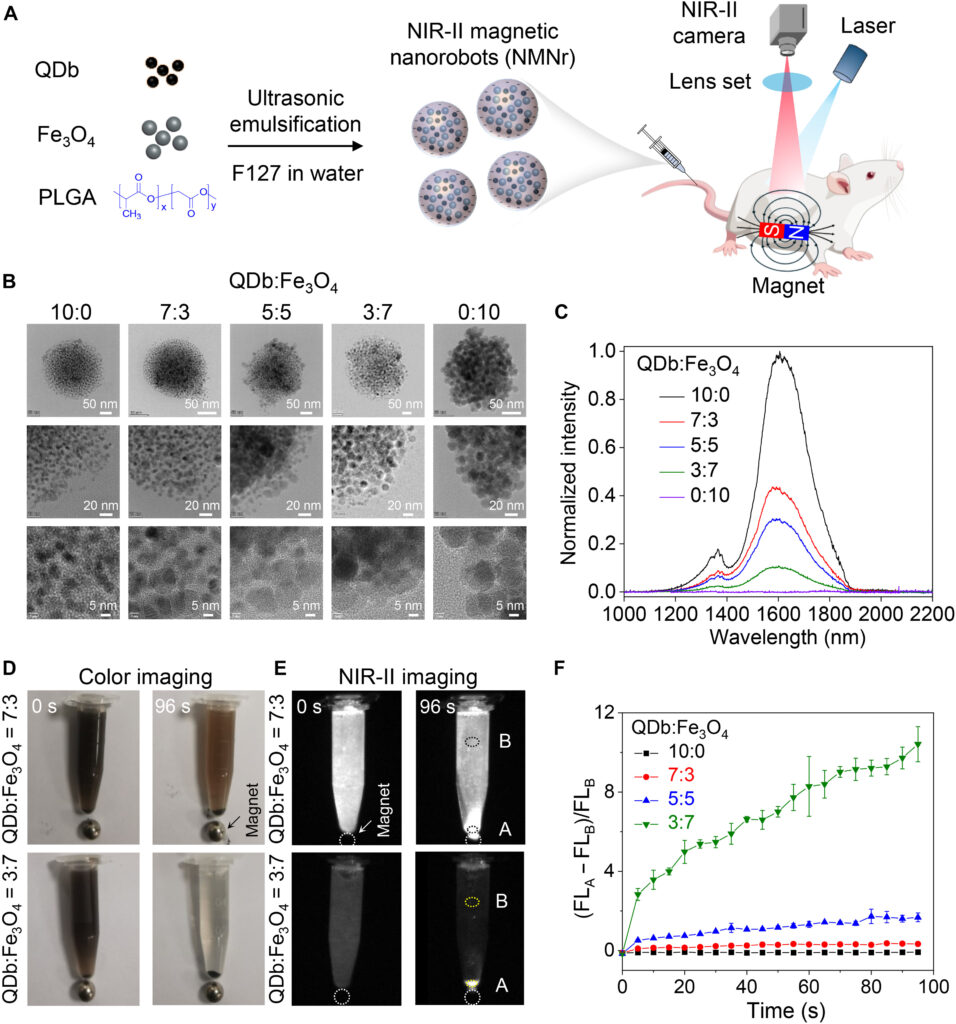
Real‑time navigation of nanorobots with high spatiotemporal resolution and molecular contrast in deep tissues via noninvasive methods has been challenging. In this study, researchers developed near‑infrared II (NIR‑II; 1000–3000 nm) magnetic nanorobots that balance fluorescence brightness at ~1600 nm with magnetic strength, enabling precise locomotion in the peritoneal cavity, hindlimb, liver, spleen, and lower gastrointestinal tract of live mice under real‑time NIR‑II imaging guidance. Two‑plex NIR‑II imaging provided simultaneous information on nanorobot location and target site position with molecular specificity. The nanorobots remained stable in simulated gastric juice (pH = 2) for more than two weeks. Furthermore, magnetic locomotion of nanorobots loaded with 5‑aminosalicylic acid under NIR‑II visual feedback enabled targeted delivery to the lower gastrointestinal tract and enhanced therapeutic efficacy in mice with inflammatory bowel disease. This platform opens new avenues in precision medicine.