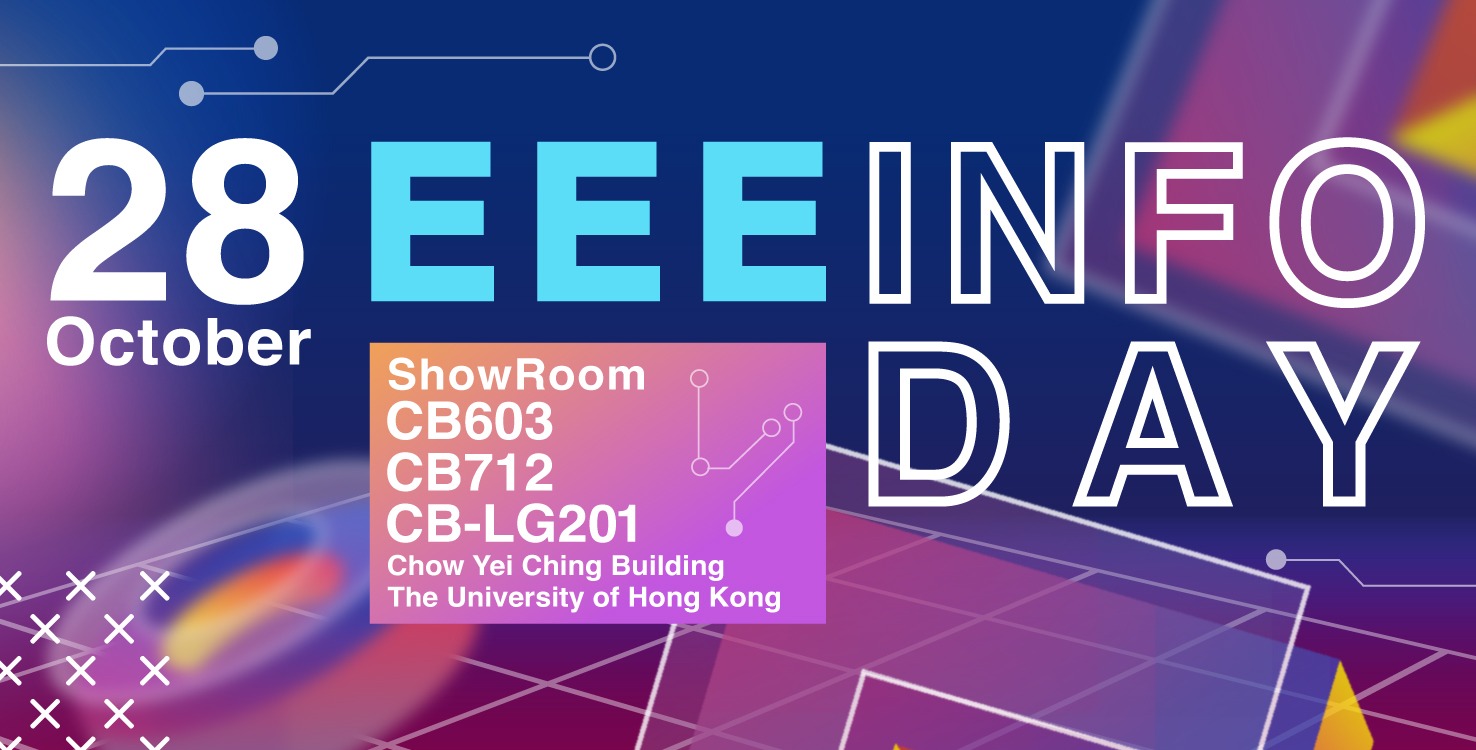
• HKU Information Day 2023

    Main Exhibition Location: 4/F Podium, Haking Wong Building, The University of Hong Kong Come and visit our demo and lab: G/F Foyer, Composite Building, The University of Hong Kong 603, 6/F, Chow Yei Ching Building, The University of Hong Kong LG-201, LG2/F, Chow Yei Ching Building, The University of Hong Kong 712, 7/F, Chow Yei […]
  • HKU InfoDay 2024 x EEE Showroom

    HKU Information Day 2024 will be held on October 26. 2024 (Saturday) 2024. Welcome to visit our laboratory and research projects in Chow Yei Ching Building. See you there! 香港大學本科入學資訊日將於在2024年10月26日(星期六)舉行。歡迎大家來周亦卿樓參觀我們的實驗室和有趣的研究項目。到時見! Date: 26 October 2024 (Saturday) Time: 9:00 am – 5:30 pm Showroom (1): Precision Biosensing & Biophysics Laboratory Location: Room LG303, LG3/F, Chow Yei Ching […]

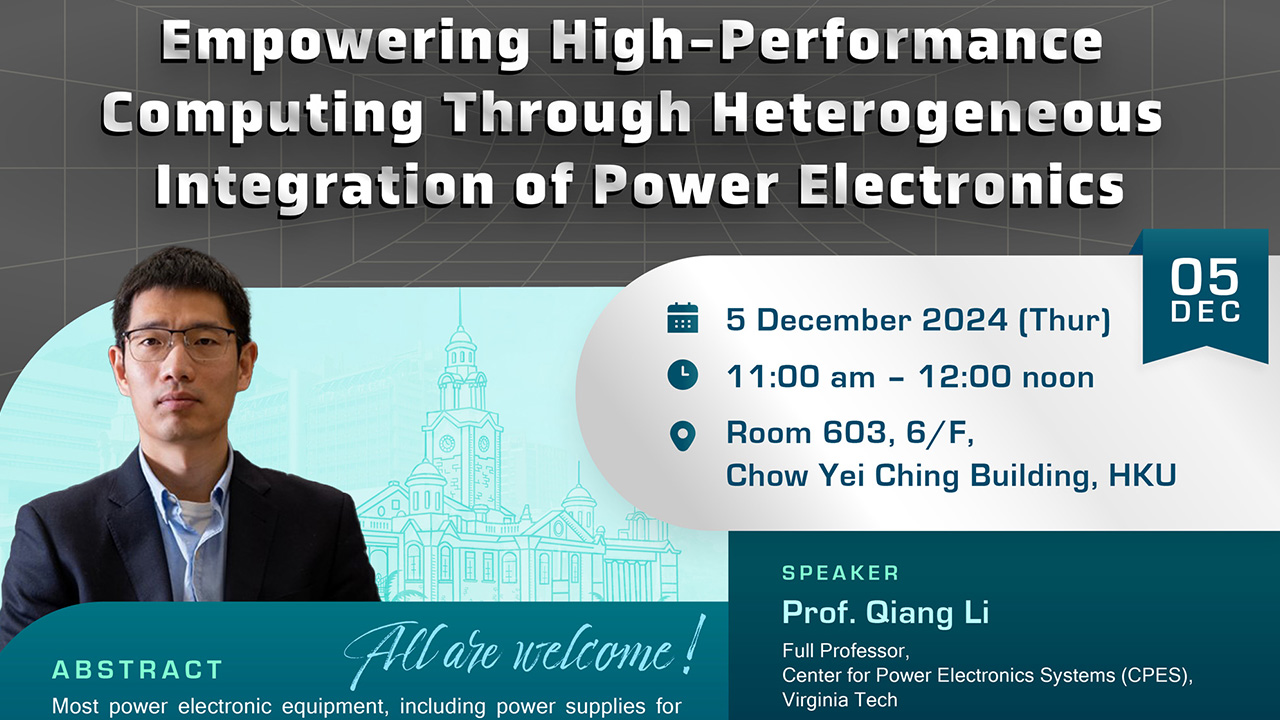
  • Empowering High-Performance Computing Through Heterogeneous Integration of Power Electronics

    Room CB-603, 6/F, Chow Yei Ching Building, The University of Hong Kong

    Abstract Most power electronic equipment, including power supplies for Artificial Intelligence (AI) and high-performance computing systems, has traditionally been designed using discrete active and passive components. However, the power electronics industry has reached a stage where improving one performance attribute often comes at the expense of others. As AI and high-performance computing systems demand increasingly […]

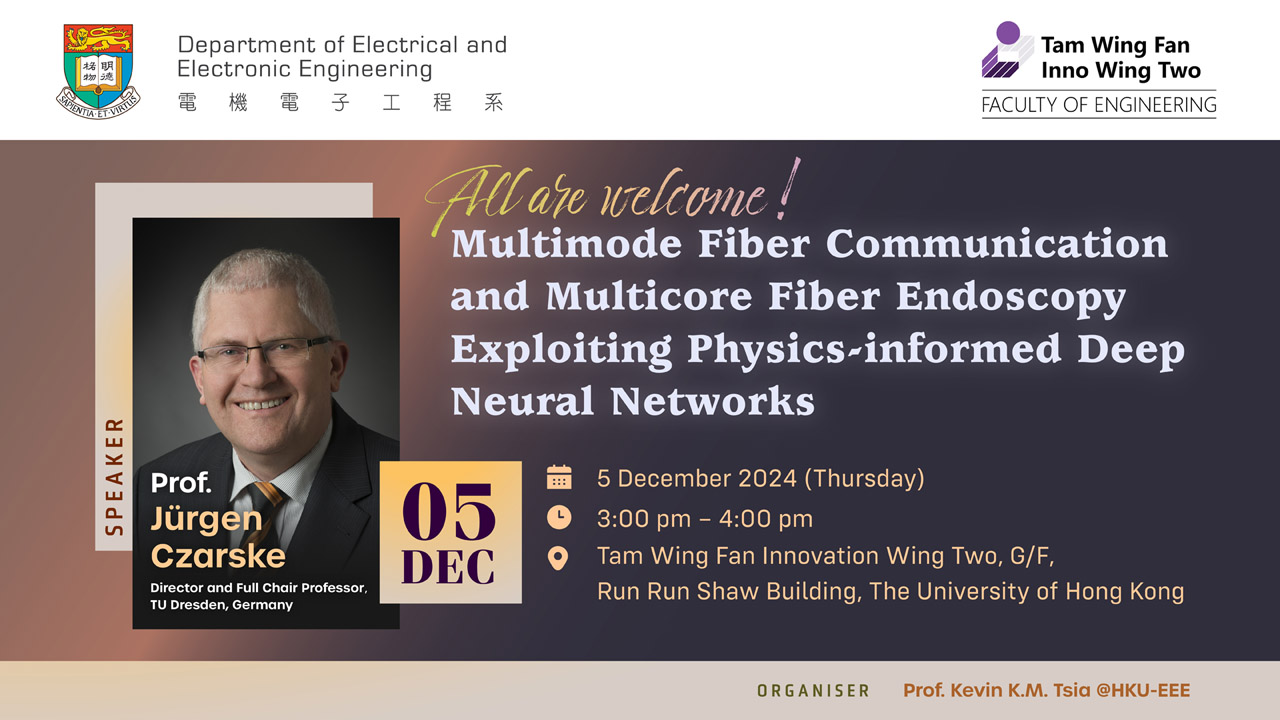
  • Multimode Fiber Communication and Multicore Fiber Endoscopy Exploiting Physics-informed Deep Neural Networks

    Tam Wing Fan Innovation Wing Two, G/F, Run Run Shaw Building, The University of Hong Kong

    Abstract Advances in fiber-optic systems are crucial for the internet. To cope with this continued exponential growth as Keck´s law, multimode fibers (MMF) with spatial division multiplexing (SDM) are proposed. However, there are challenging mode scattering effects in MMF. Physics-informed deep learning enables to correct the scattering, resulting in advancing security and data rate. We […]

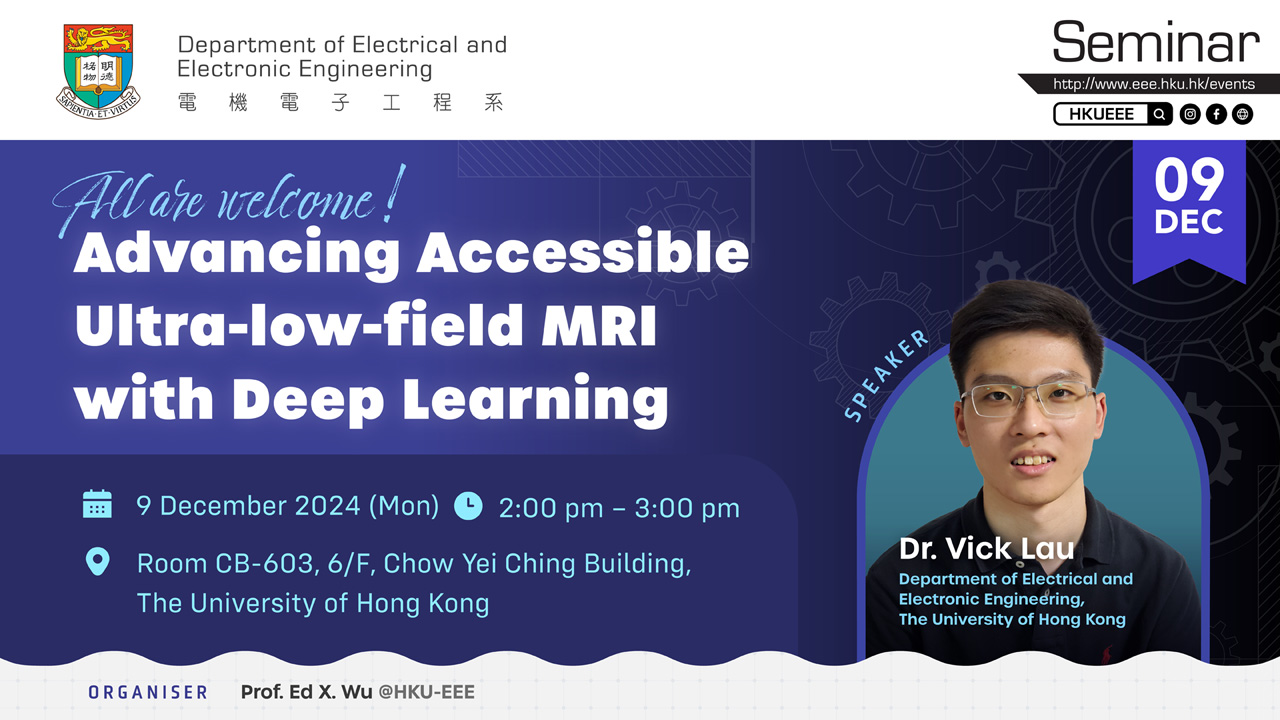
  • Advancing Accessible Ultra-low-field MRI with Deep Learning

    Room CB-603, 6/F, Chow Yei Ching Building, The University of Hong Kong

    Abstract Magnetic Resonance Imaging (MRI) is a versatile medical imaging modality. Despite its crucial role in modern healthcare, MRI remains largely inaccessible to the general population. The development of ultra-low-field (ULF) MRI offers opportunities for enabling low-cost, low-power, and potentially portable clinical applications. However, the imaging performance of these emerging ULF MRI scanners remains poor […]

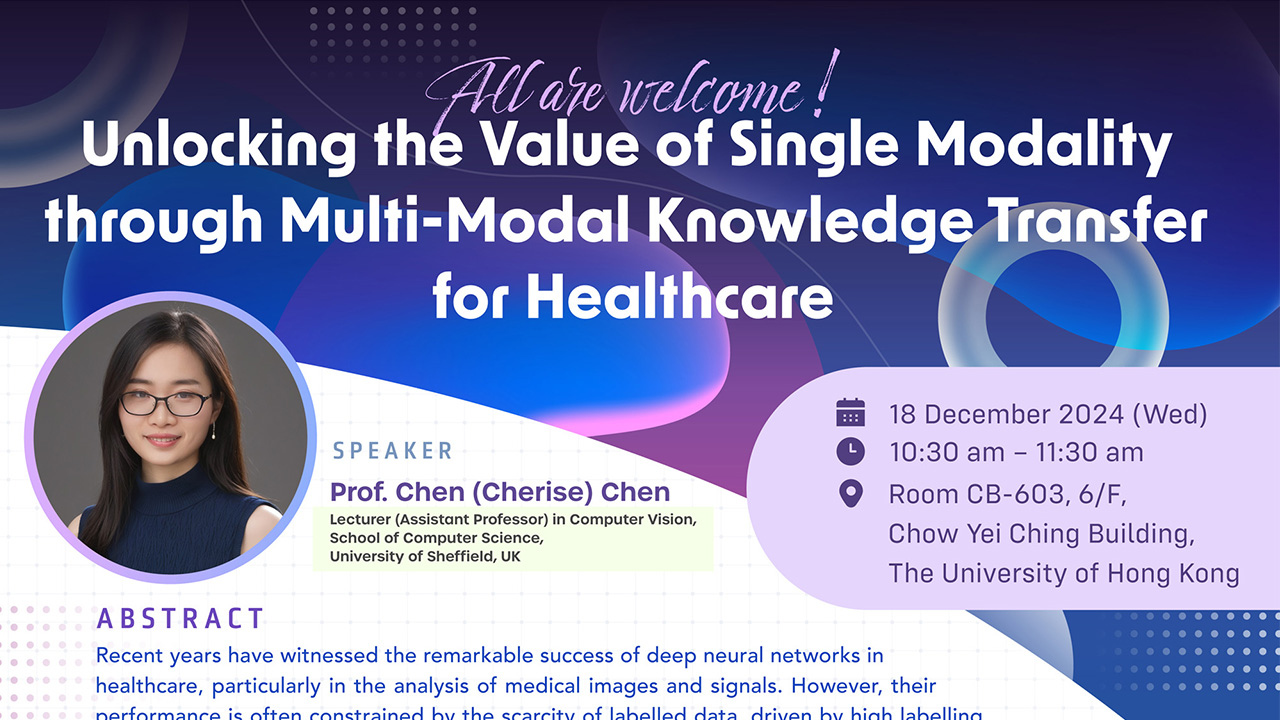
  • Unlocking the Value of Single Modality through Multi-Modal Knowledge Transfer for Healthcare

    Room CB-603, 6/F, Chow Yei Ching Building, The University of Hong Kong

    Abstract Recent years have witnessed the remarkable success of deep neural networks in healthcare, particularly in the analysis of medical images and signals. However, their performance is often constrained by the scarcity of labelled data, driven by high labelling costs and challenges related to data privacy and sharing. In this talk, I will explore how […]

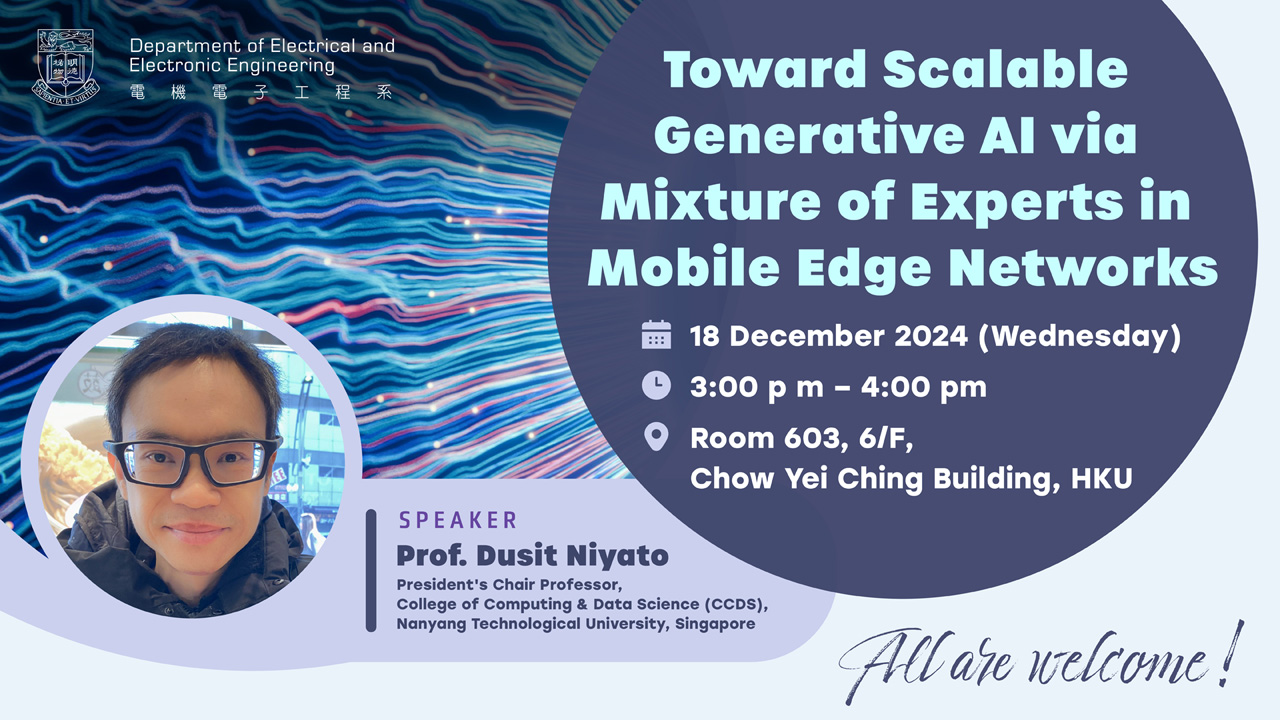
  • Toward Scalable Generative AI via Mixture of Experts in Mobile Edge Networks

    Room CB-603, 6/F, Chow Yei Ching Building, The University of Hong Kong

    Abstract The evolution of generative artificial intelligence (GAI) has driven revolutionary applications like ChatGPT. The proliferation of these applications is underpinned by the mixture of experts (MoE), which contains multiple experts and selectively engages them for each task to lower operation costs while maintaining performance. Despite MoE's efficiencies, GAI still faces challenges in resource utilization […]

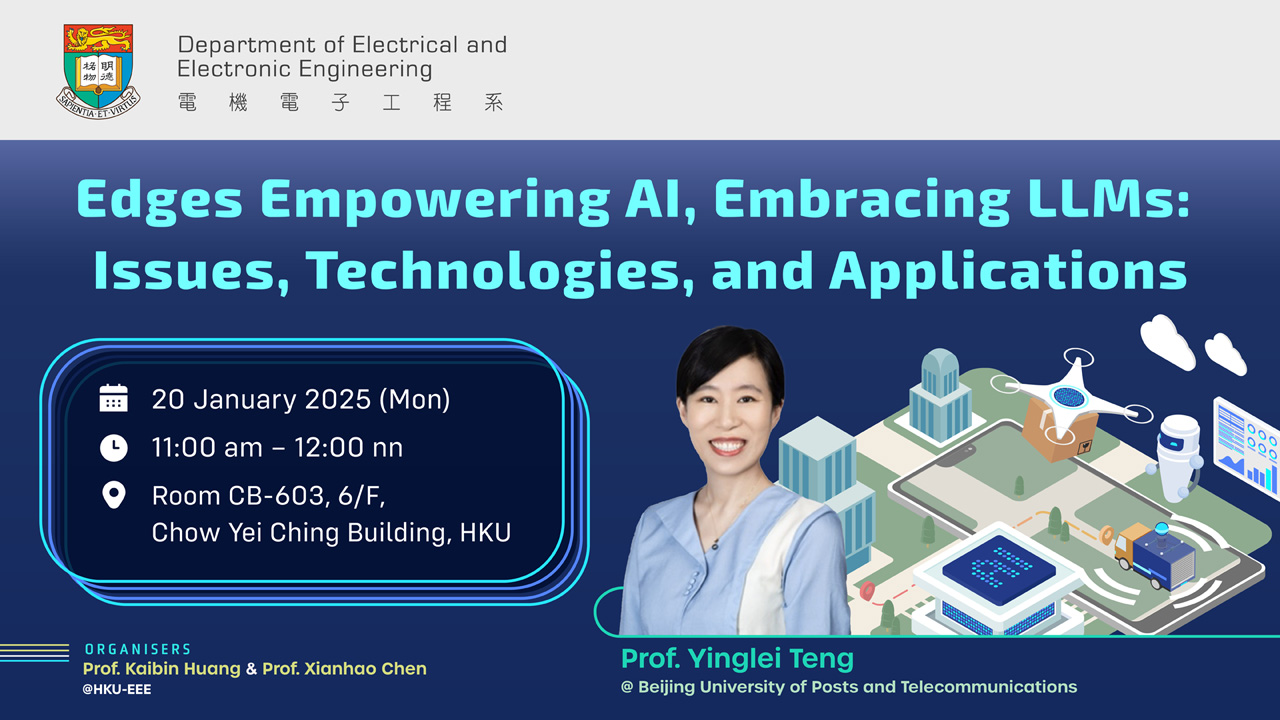
  • Edges Empowering AI, Embracing LLMs: Issues, Technologies, and Applications

    Room CB-603, 6/F, Chow Yei Ching Building, The University of Hong Kong

    Abstract Accelerated by the rapid advancements in AI and IoT technologies, there is an urgent need to extend AI capabilities to the network edge to fully harness the potential of big data. To address this demand, edge Intelligence has emerged as a promising paradigm for enabling distributed, computation-intensive AI applications on edge devices. This talk […]

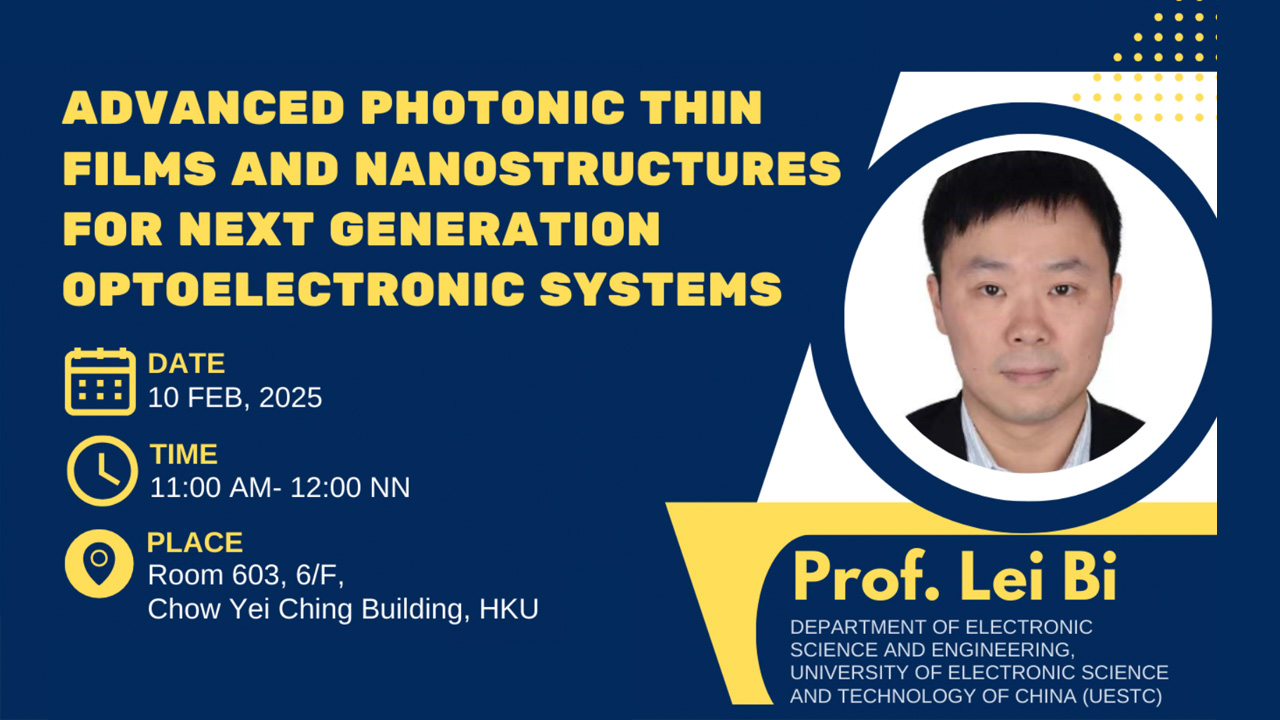
  • Advanced Photonic Thin Films and Nanostructures for Next Generation Optoelectronic Systems

    Room CB-603, 6/F, Chow Yei Ching Building, The University of Hong Kong

    Abstract Photonic materials are the backbones of optical communication, sensing and imaging systems. The advent of artificial intelligence, internet of things and human-machine interfaces require optical information perception, data communication and storage with a much higher bandwidth, smaller footprint yet extremely low power consumption. Bulk materials can no longer support these tasks. Development of advanced […]

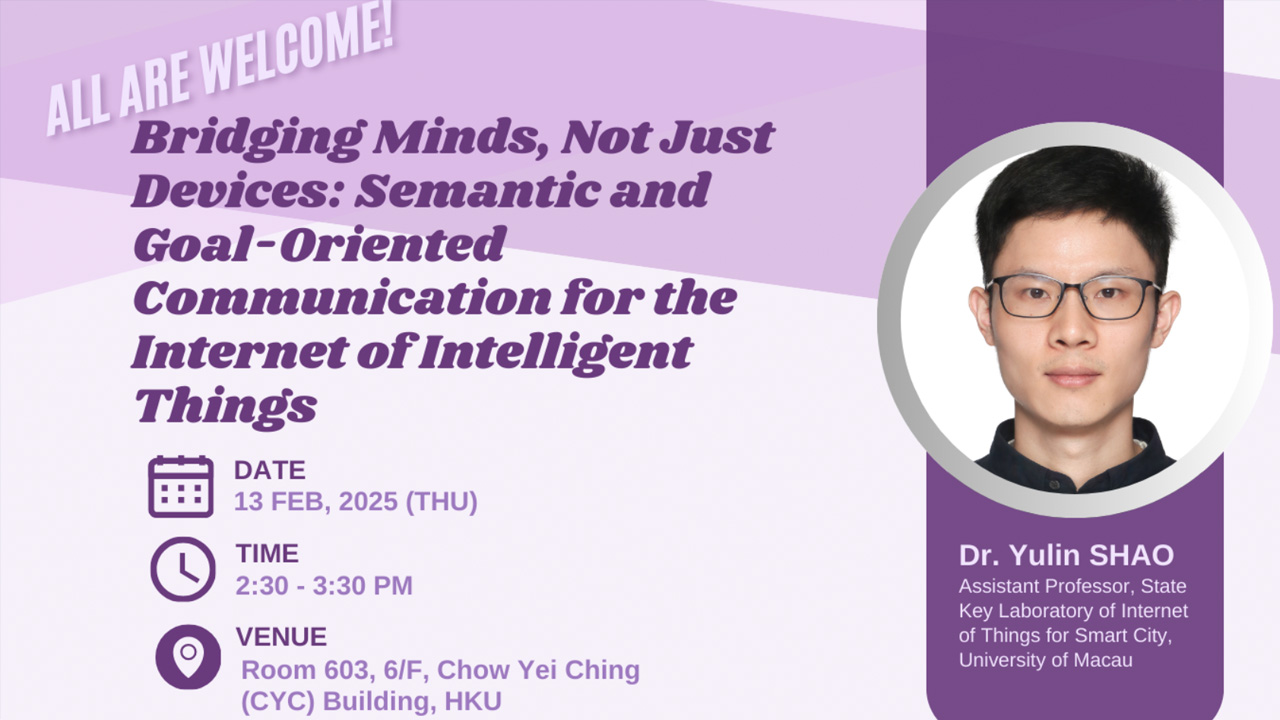
  • Bridging Minds, Not Just Devices: Semantic and Goal-Oriented Communication for the Internet of Intelligent Things

    Room CB-603, 6/F, Chow Yei Ching Building, The University of Hong Kong

    Abstract The next frontier of the Internet of Things (IoT) lies in transforming today’s smart devices into collaborative cognitive agents – an ecosystem termed the Internet of Intelligent Things (IoIT). While current IoT systems center on raw data exchange, they fall short of enabling true collaboration: devices cannot share meaningful insights or align their objectives […]

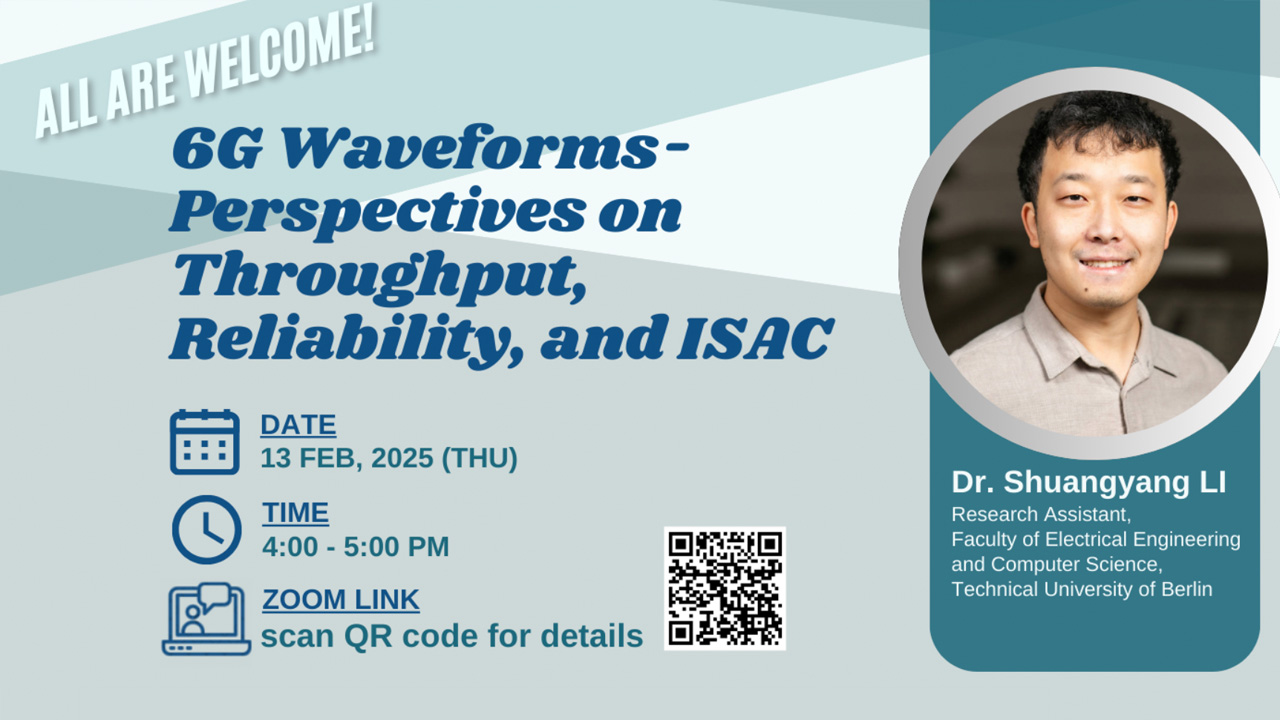
  • 6G Waveforms-Perspectives on Throughput, Reliability, and ISAC

    Online via Zoom

    Online via Zoom link: https://hku.zoom.us/j/2025021302 Abstract With the commercialization of 5G technology, research on 6G has emerged as a key focus in the field of wireless communications. In this talk, we explore three candidate waveforms for 6G, designed to meet its stringent requirements for throughput, reliability, and integrated sensing and communications (ISAC). We begin by […]

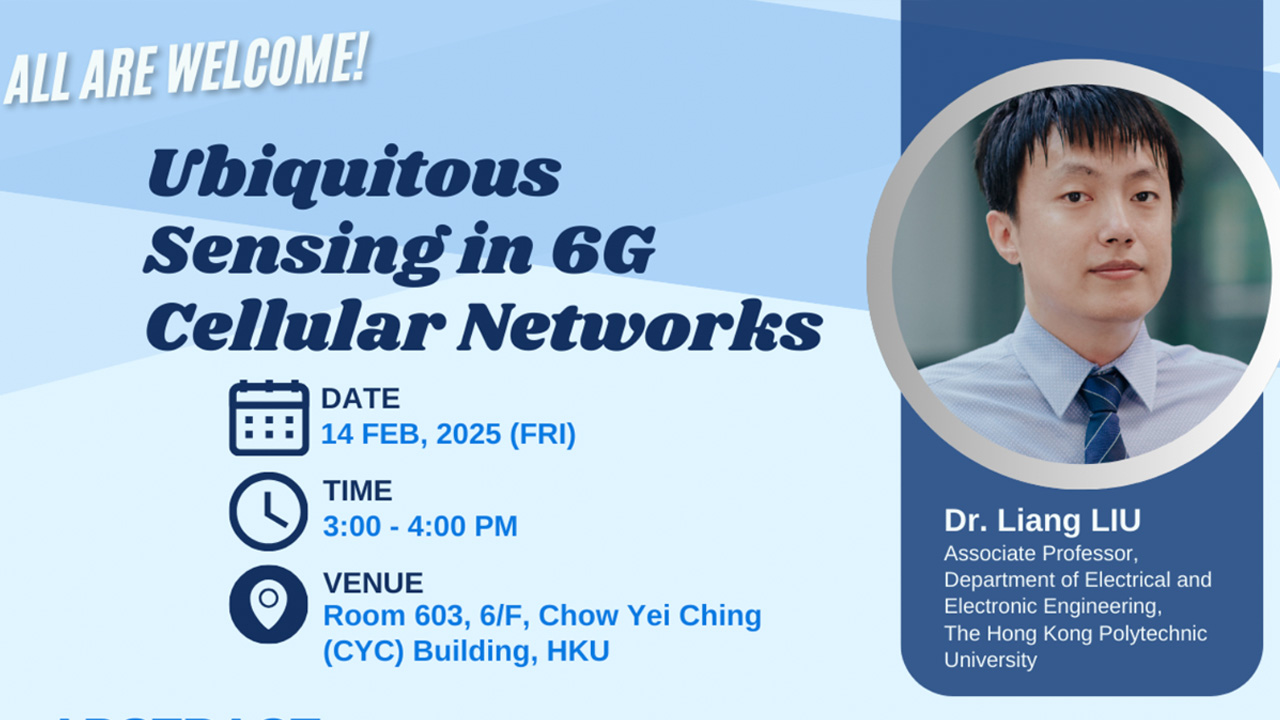
  • Ubiquitous Sensing in 6G Cellular Networks

    Room CB-603, 6/F, Chow Yei Ching Building, The University of Hong Kong

    Abstract Recently, the International Telecommunication Union (ITU) has identified integrated sensing and communication (ISAC) as a primary usage scenario for the sixth-generation (6G) cellular networks in IMT-2030 Framework. As a result, future cellular networks will provide not only communication services, but also sensing services such as localization and tracking. However, how to exploit the existing […]

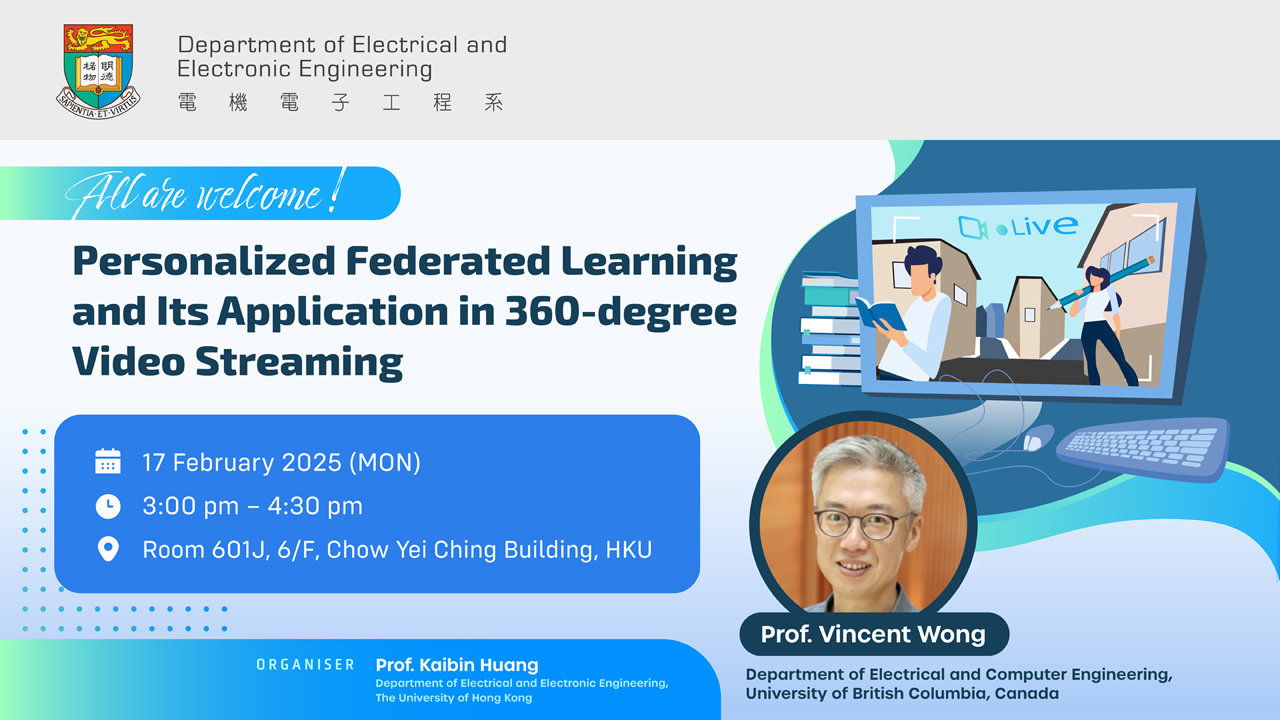
  • Personalized Federated Learning and Its Application in 360-degree Video Streaming

    Room CB-601J, 6/F, Chow Yei Ching Building, The University of Hong Kong

    Abstract Federated learning is a distributed artificial intelligence framework, which allows multiple edge devices to train a single model collaboratively. In this talk, we first introduce a personalized federated learning algorithm which can tackle the issues of data heterogeneity and device heterogeneity. Then, we present a content-based viewport prediction framework for 360-degree video streaming, wherein […]

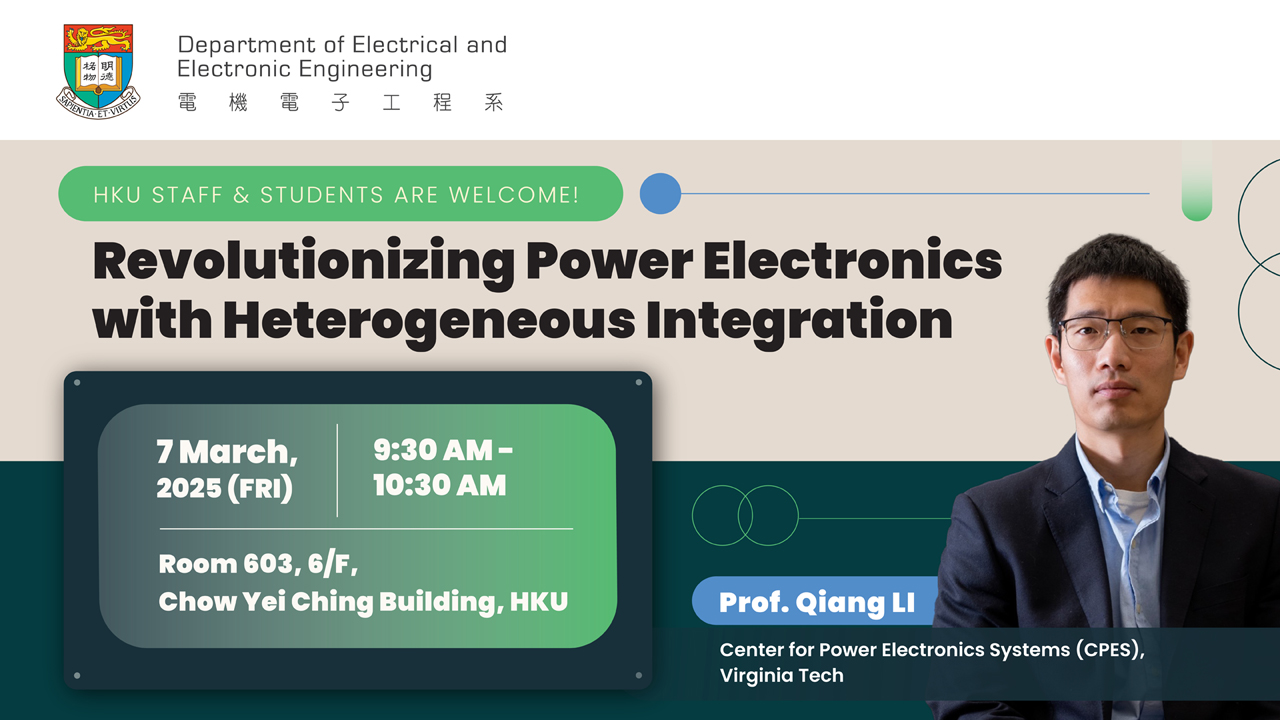
  • Revolutionizing Power Electronics with Heterogeneous Integration

    Room CB-603, 6/F, Chow Yei Ching Building, The University of Hong Kong

    Abstract Traditional power electronic equipment has long relied on discrete active and passive components, with performance enhancements often requiring trade-offs. Despite technological advancements, manufacturing processes remain labor-intensive and largely unchanged for decades. The advent of wide-bandgap (WBG) power semiconductor devices, such as silicon carbide (SiC) and gallium nitride (GaN), has significantly reduced conduction and switching […]

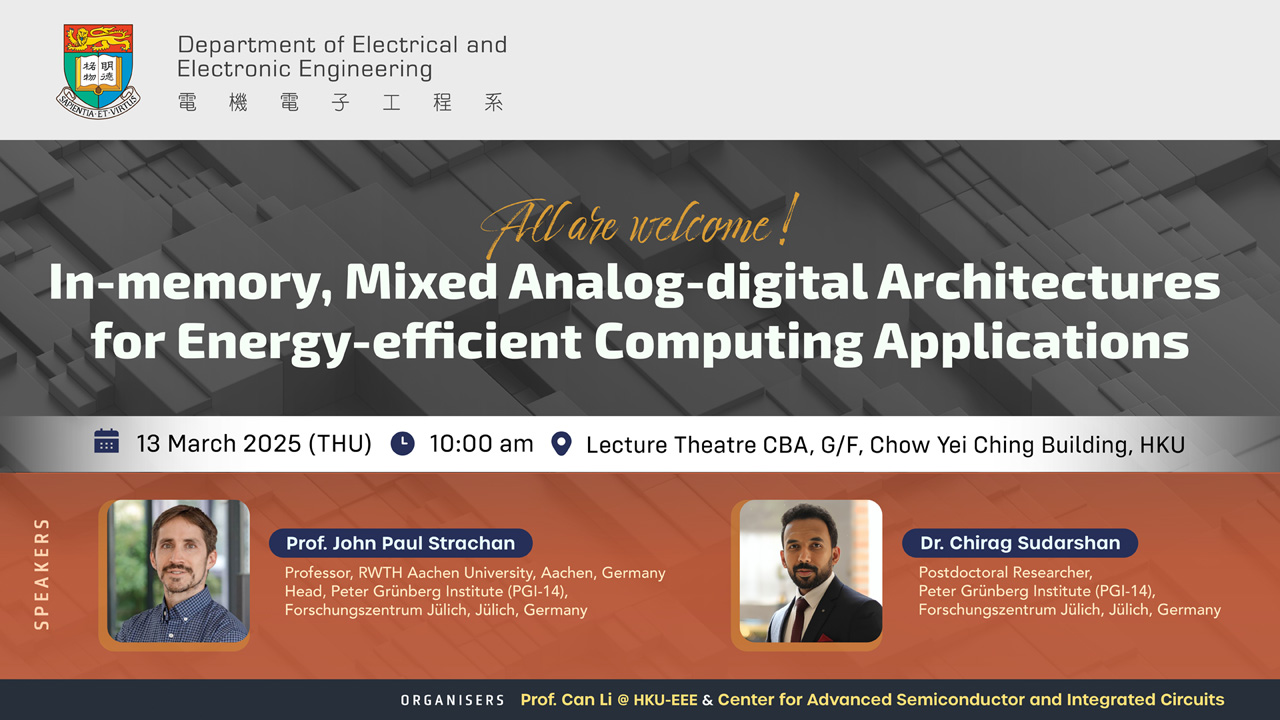
  • In-memory, Mixed Analog-digital Architectures for Energy-efficient Computing Applications

    Lecture Theatre CB-A, G/F, Chow Yei Ching Building, The University of Hong Kong

    Abstract There is simultaneously an interest for more energy-efficient hardware in challenging applications, as well as a drive to overhaul the von Neumann architecture toward more brain-like architectures. Compute-in-Memory (CIM) is one emerging paradigm addressing key memory bottlenecks such as bandwidth limitations, access latency, and high data movement energy in conventional computing platforms. In part […]

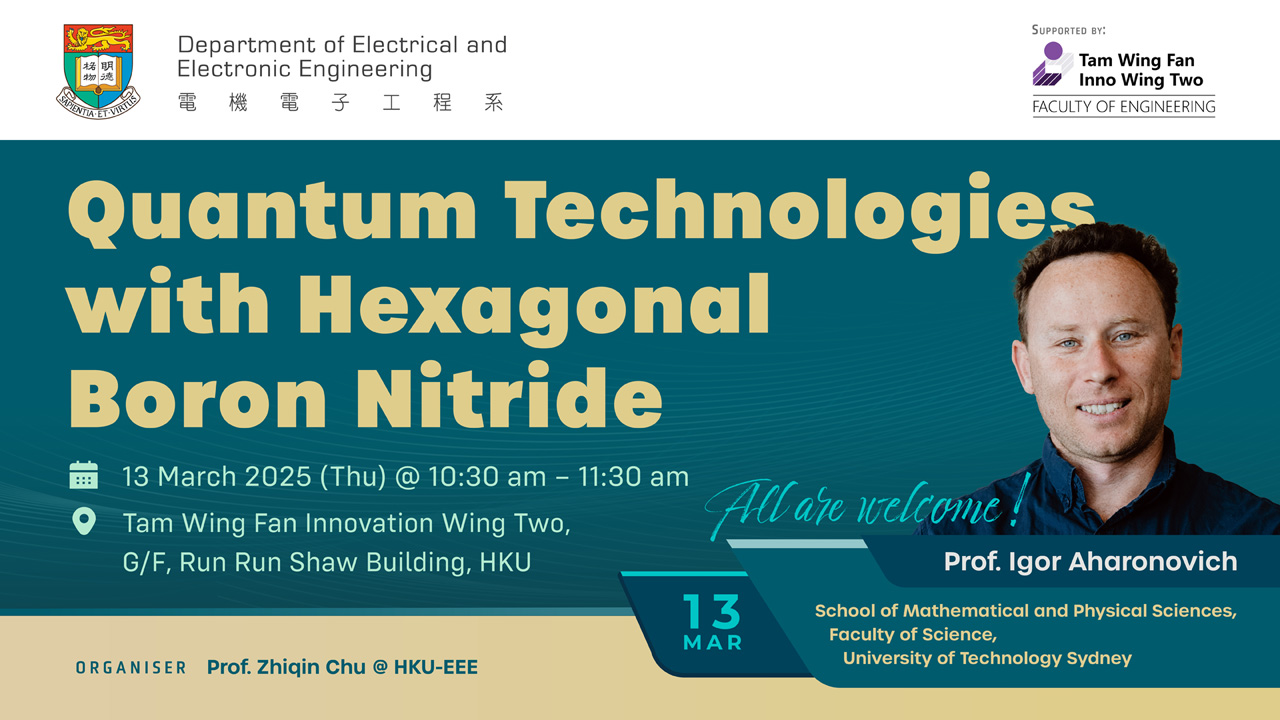
  • Quantum Technologies with Hexagonal Boron Nitride

    Tam Wing Fan Innovation Wing Two, G/F, Run Run Shaw Building, The University of Hong Kong

    Abstract Engineering robust, solid-state quantum systems is amongst the most pressing challenges to realise scalable quantum photonic circuitry. While several 3D systems (such as diamond or gallium arsenide) have been thoroughly studied, solid state emitters in van der Waals (vdW) and two dimensional (2D) materials are still in their infancy. In this presentation, I will […]