
An engineering research team from the Department of Electrical and Computer Engineering and Centre for Advanced Semiconductors and Integrated Circuits (CASIC) at The University of Hong Kong (HKU), led by Professor Yuhao ZHANG and Mr. Xin YANG, has developed a breakthrough in cryogenic electronics. Their research, which introduces gate-controlled negative differential resistance (NDR) in silicon carbide (SiC) Metal-Oxide-Semiconductor Field-Effect Transistor (MOSFET), enables energy-efficient spiking neuromorphic circuits designed for the extreme environments of quantum computing and space exploration. The research paper has been published in Nature Communications, titled “Cryogenic neuromorphic circuits using gate-controlled negative differential resistance in silicon carbide”.
Scaling quantum computer requires sophisticated control electronics that can operate inside dilution refrigerators at temperatures near absolute zero. Conventional silicon-based circuits consume significant power, generating heat that destabilizes sensitive quantum bits (qubits). This often forces electronics to be placed further away, leading to extensive wiring that introduces noise and limits the total number of qubits a system can support.
The research team introduces a programmable cryogenic neuromorphic hardware platform based on industry-standard SiC technology. They discovered that SiC MOSFETs exhibit potent S-shape NDR behavior when cooled below 2 K. Unlike previous NDR effects driven by heat, this mechanism is based on carrier dynamics involving dual dopant levels intrinsic to SiC, making it both robust and repeatable.
By leveraging a unique electron-donor impact ionization (EDII) mechanism, the team demonstrated devices with record-high performance, including an on/off current ratio exceeding 107 and a wide modulation window. Three types of neurons are demonstrated, including sensory neuron, logic neuron, and integrate-and-fire neuron.
These results pave the way for scalable, ultra-low-power hardware that can operate at millikelvin temperatures, effectively addressing the “interconnect bottleneck” in large-scale quantum systems. Meanwhile, they underscore the potential of wide-bandgap semiconductors to move beyond power conversion and become a foundational building block for the future of quantum information processing and deep-space exploration.
Link to the paper: https://www.nature.com/articles/s41467-026-70963-6
Xin Yang#, Matthew Porter#, Yuan Qin, Zineng Yang, Hehe Gong, Liyang Jin, Zichen Xi, Han Wang, Liyan Zhu, Yuhao Zhang* and Linbo Shao*, Cryogenic neuromorphic circuits using gate-controlled negative differential resistance in silicon carbide. Nature Communications. 2026, accepted. DOI: 10.1038/s41467-026-70963-6.
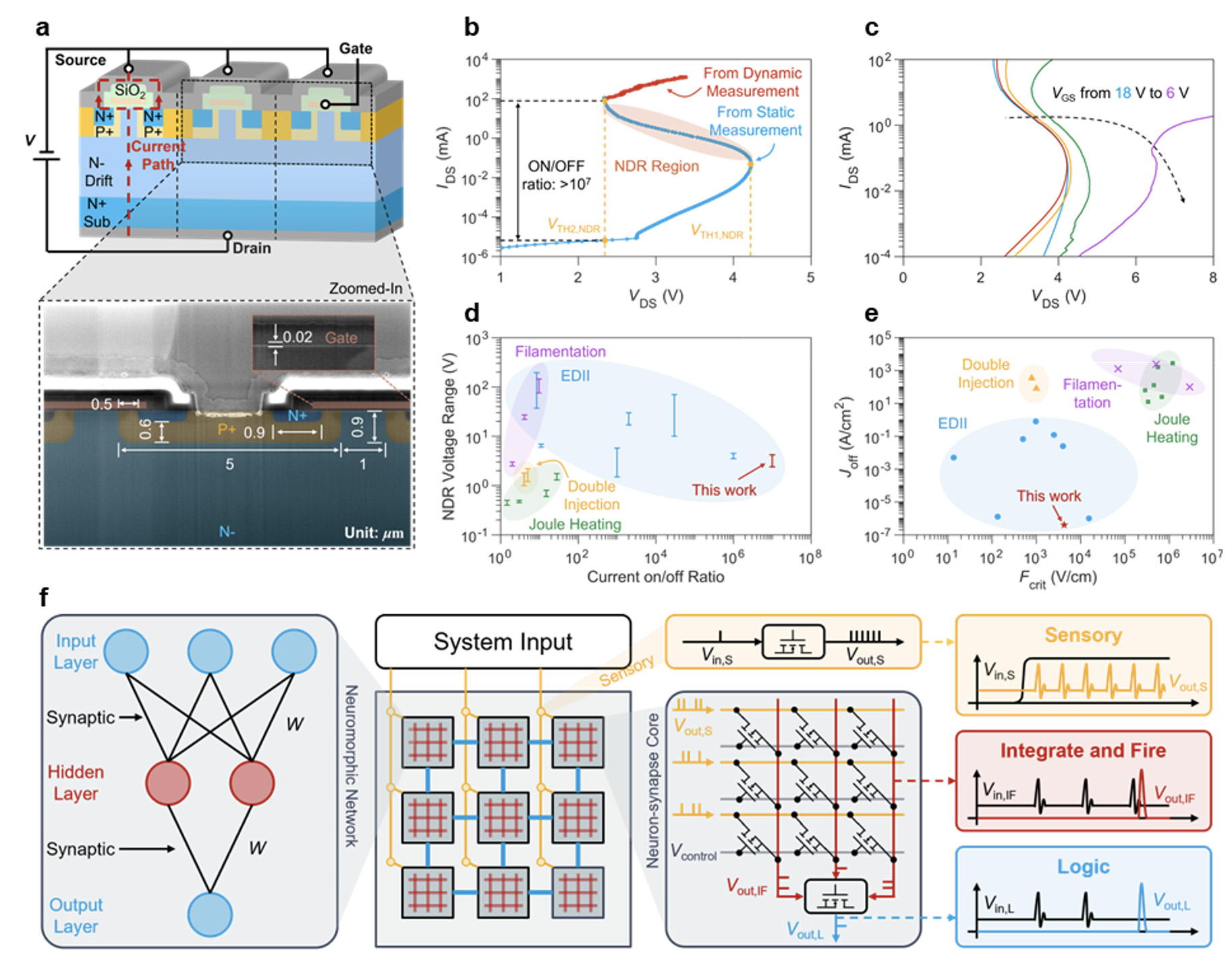
^Figure 1: NDR in SiC MOSFETs and their applications in spiking neuromorphic circuits.
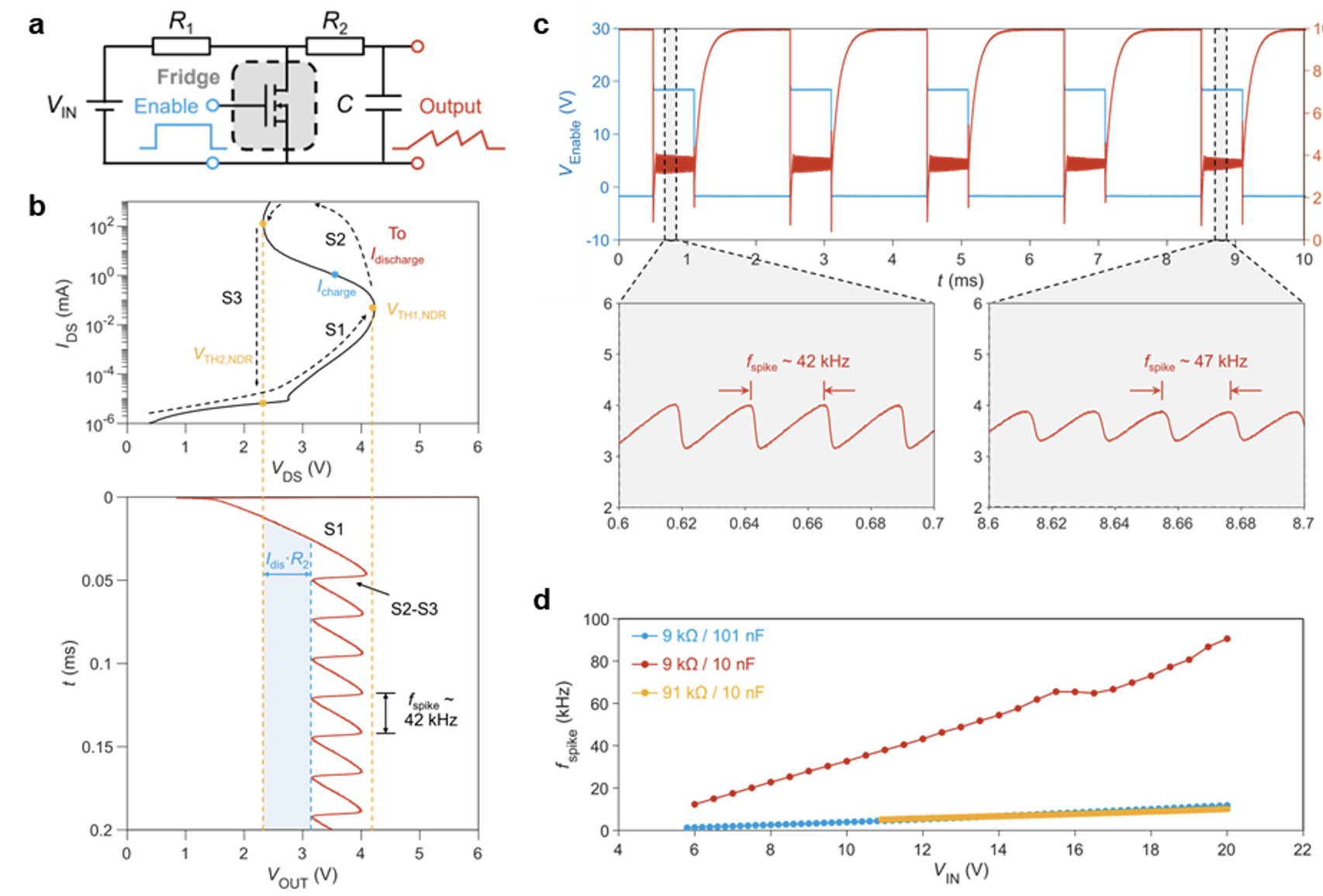
^Figure 2: NDR-based sensory neuron.
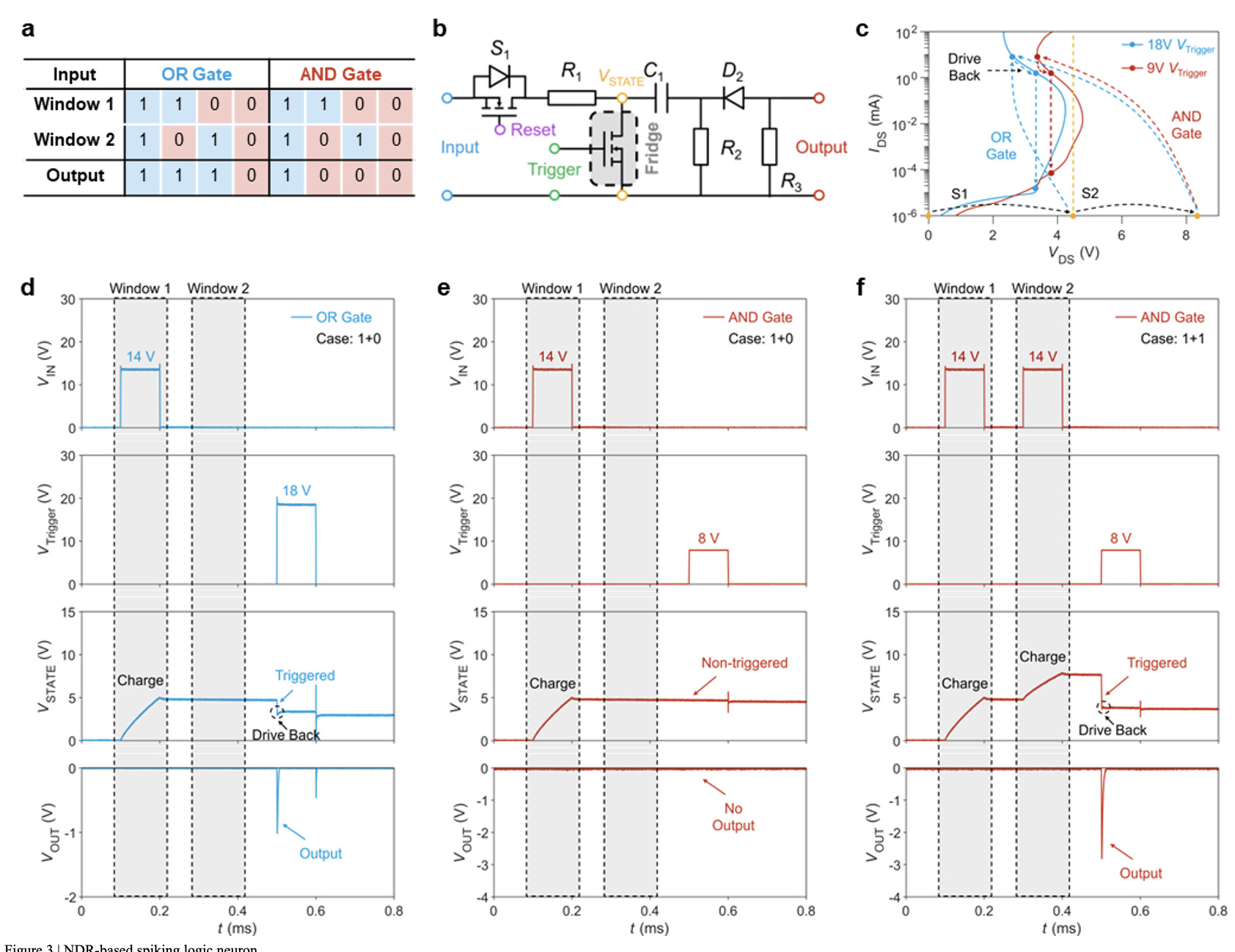
^Figure 3: NDR-based spiking logic neuron.
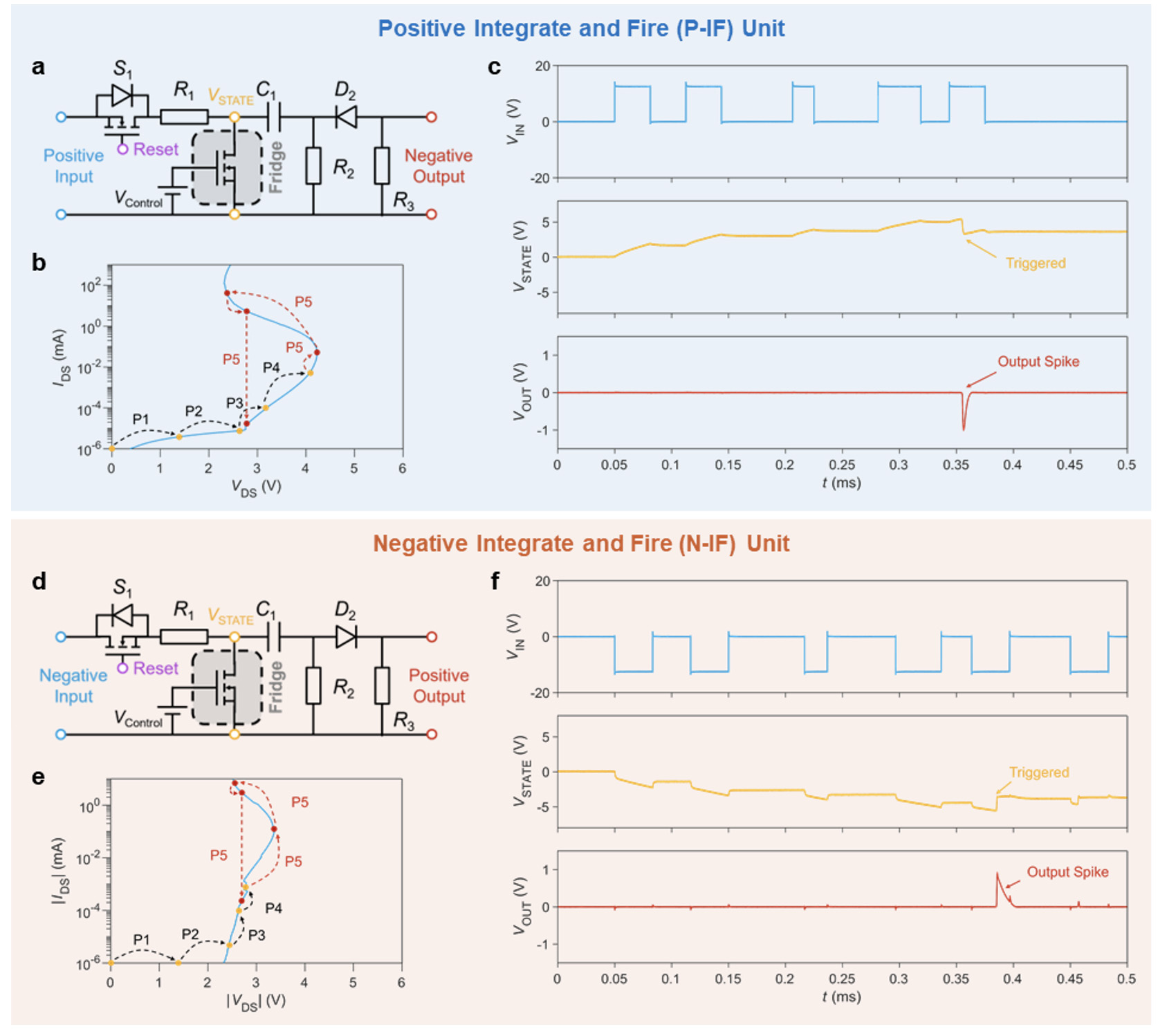
^Figure 4: NDR-based integrate-and-fire neurons with positive and negative types.


^Mr. Xin YANG